The what and the who
We are a network of young Low Saxon speakers worldwide. The perspective of younger people is often missing from general language politics. We want to change this and give ourselves a voice and a seat at the table.

History of young politics
The Low German Secretariat (Niederdeutschsekretariat, NdS) has begun to shift its focus to a more young perspective since 2019. It has since then supported projects and network meetings that enabled young people to come together and to formulate their wishes and problems. This has led to a constant inclusion of young people into the decisions of the Federal Assembly for Low German (Bundesrat für Niederdeutsch, BfN), which has led to the establishment of the position of the youth representatives in their council since 2022.
Network meetings
Together with the Minority Secretariat, the NdS organizes a yearly network gathering together with the four national minorities in Germany since 2023. These meetings have helped to teach young people more about resilience, identity, diversity and ways of political participation. Since 2025, the focus of the NdS is shifting towards enabling structures for young people to create an own organization for more self-determination and a greater platform for exchange and building projects together.

Official foundation 8/06/2026
The Nettwark Junge Lüüd (NJL) was officially founded on 8 June 2026, which marks a milestone because it is the first youth organisation for the Low Saxons / Low Germans. At the official general assembly, the current rules of procedure was officially adopted. Also, the logo was voted as the official representation. Furthermore, we voted on the personnel of the Nettwark Junge Lüüd. The positions of the network speakers are held by Janine Siewert and André Graën. They officially represent the NJL and are responsible for the official affairs of it. Dieke Günther and Marie-Claire Topp were elected the representatives of the Junge Lüüd within the Bunnsraat för Nedderdüütsch (BfN). Antje Roolfs and Lea Alice Luckmann were appointed communications officers and are responsible for public relations and networking within and beyond the organisation. Alltogether they share the tasks and responsibilities of leading the network. Their first official engagements will be the Advisory Committee for questions of the Low German speaker group (Beratender Ausschuss zu Fragen der niederdeutschen Sprechergruppe) at the Federal Ministry of the Interior, where young people have an official position. (See report from last year) Also, the first meeting of the Bunnsraat för Nedderdüütsch (BfN) of the new legislature period will take place on the 23th of Juli, where the representatives also have a permanent seat as guests. Another network meeting in person is planned for late summer this year.
Second network meeting, last words
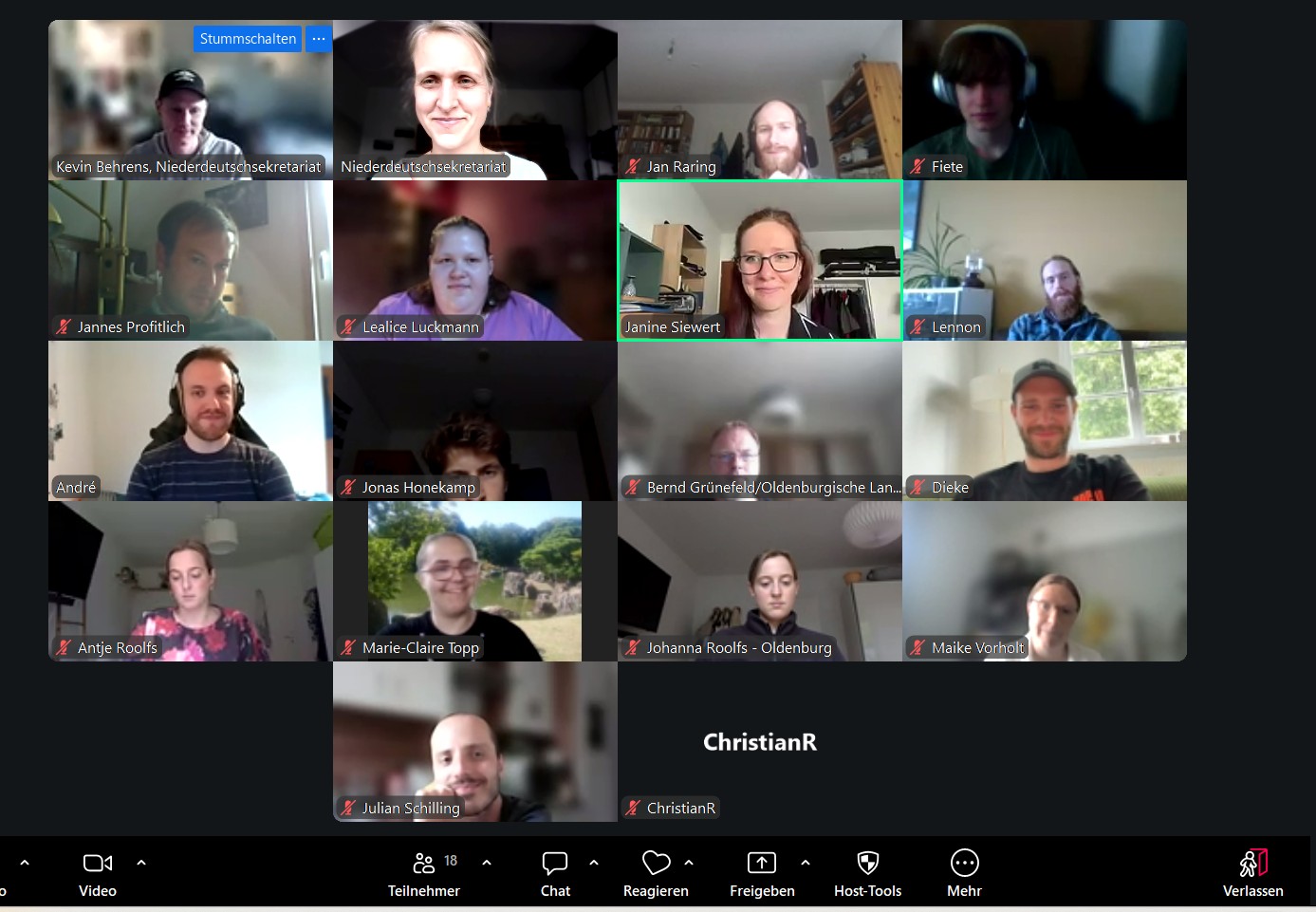
On the 25th of March 2026, the second network meeting took place online. Participants from all over the world participated, Low Saxon speakers from the Netherlands and Germany, as well as Plautdietsch speakers, and Pomeranos from Brazil. This meeting was held in preparation for the constituting meeting in May/June. All final matters were discussed and adopted.
First Low Saxon network meeting in Bremen
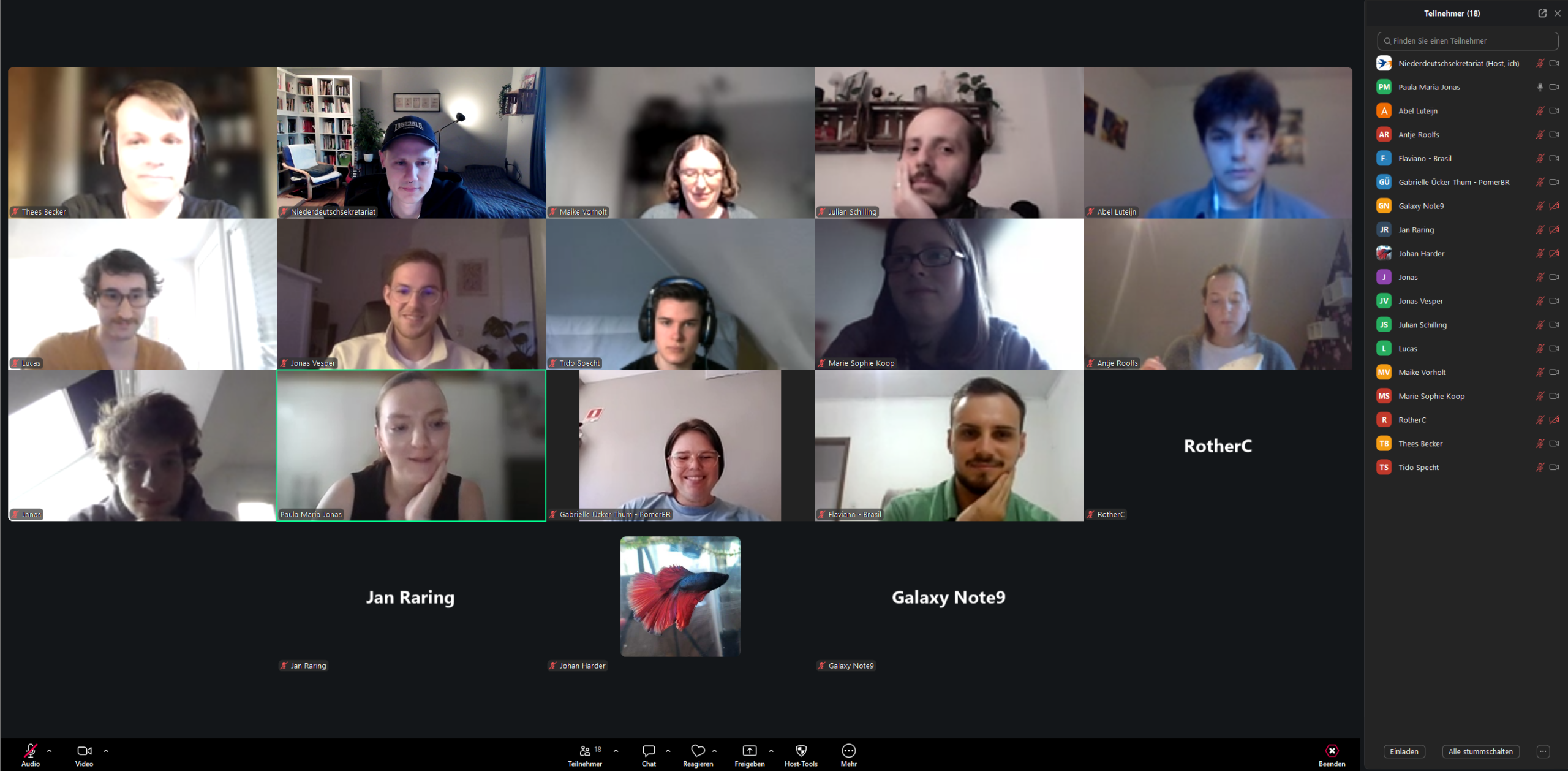
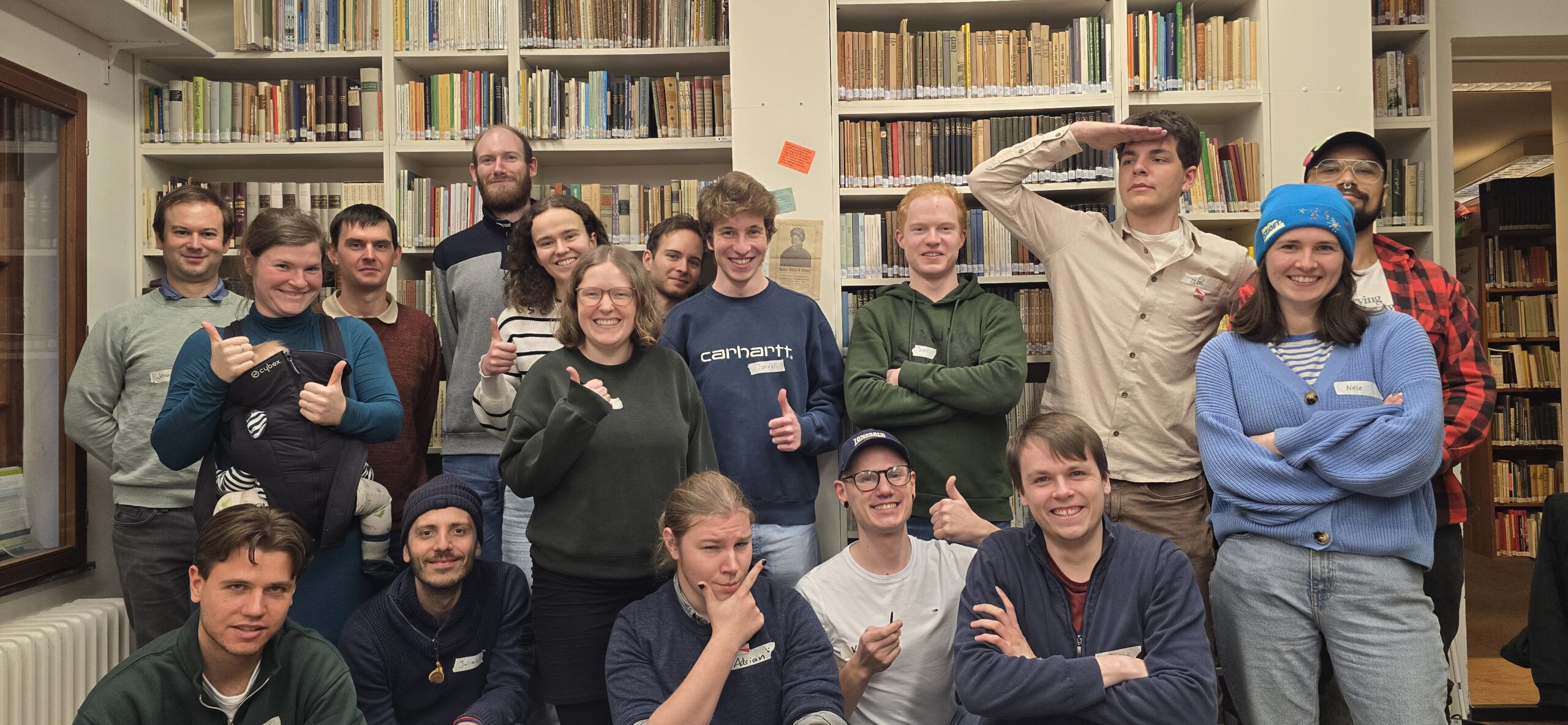
The NdS invited young speakers from all over the language area to Bremen for the first official network meeting of Low Saxons on the 31st of January, 2026. Around 20 young speakers from the Netherlands and Germany got to know each other and worked out what the key subjects of politics for young Low Saxons should be. A foundation for the creation of the organization was laid.
Structure of the organization
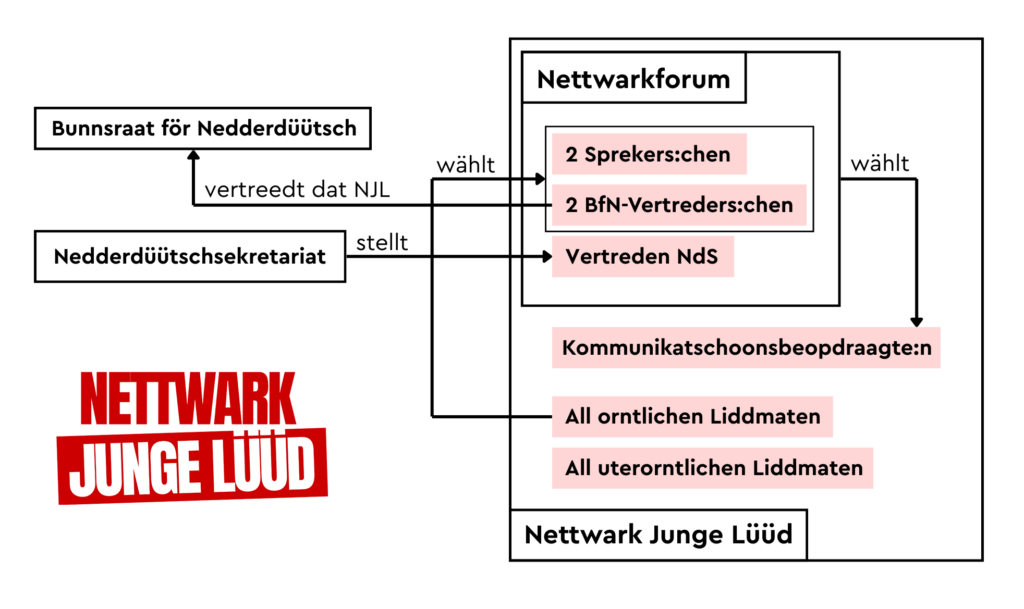
The structure of the Nettwark Junge Lüüd can be seen on this chart. The network forum consists of two elected representatives of the network in general, two elected representatives for the BfN, and a non-elected representative from the Low German Secretary. Every member between the ages of 18 and 35 can vote. Additional information can be found in the rules of procedure. Additional communication appointees help with the managing of the network.